Birds of the Backlands: Mourning Dove
By: Joshua Barss Donham
With permission from Chebucto News.
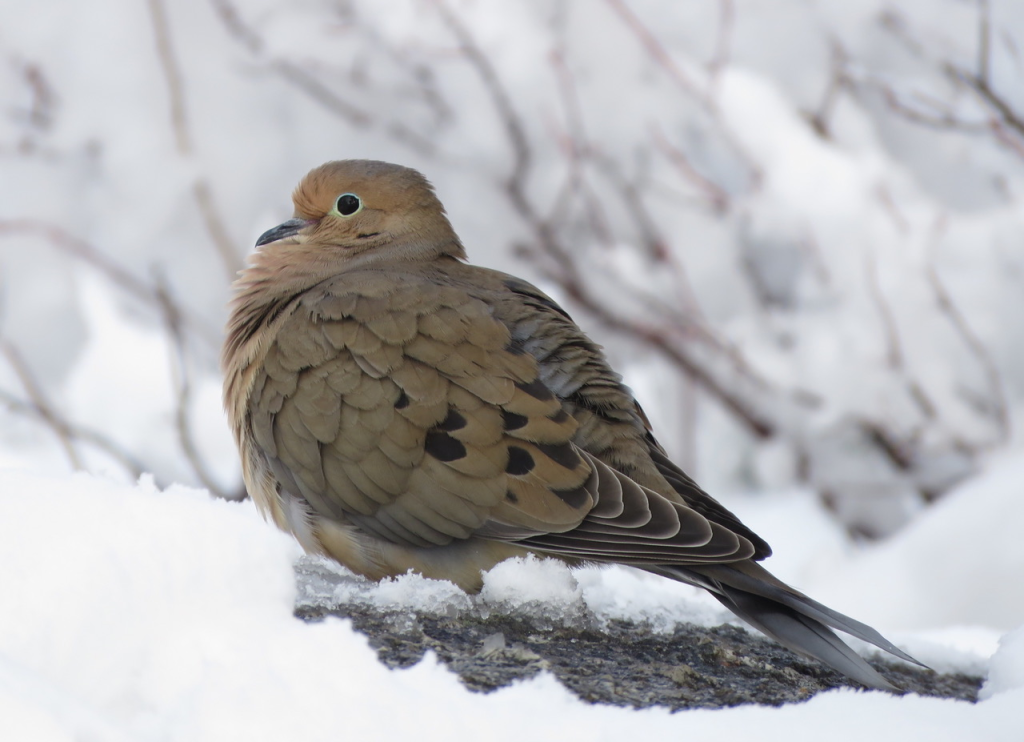
Photo: Joshua Barss Donham
The Mourning Dove is often referred to as a Turtle Dove. Settlers used the name for this North American dove because they closely resembled the Turtle Doves native to Europe and Asia. Today, in many different cultures around the world doves are widely used as powerful symbols of peace, love, and friendship, especially at this festive time.
Habitat: Mourning Doves prefer open country and the edges of woods to dense forest and are a common sight perched on telephone wires on residential streets. They have successfully adapted to and perhaps benefited from human activity. Widespread from southern Canada to Panama, and from the east coast to the west, their population is estimated at over 300 million.
Nesting: They nest on the limbs of conifers or occasionally in shrubs. They are minimalist nest builders, assembling a loose, untidy platform of twigs and plant stems. Mourning Doves often have multiple broods in a season – another reason for their high numbers. In the Backlands, where they nest, male Mourning Doves frequently use the limb of a dead-standing Jack Pine as a ‘call perch’ from which they can be heard from half a kilometer away or more. Though a migratory bird, many overwinter in the province and at the Urban Farm of Spryfield a small group can be observed most winters.
Habits: During the mating season Mourning Doves engage in bonding rituals – preening each other, bobbing heads, cooing, and grasping bills. They are ground-feeders, eating grass, weed seeds, and grain almost exclusively. They can often be seen nosing about the grass searching for seeds or on unpaved driveways where they find grit for grinding up seeds in their crops. They show up in yards picking up seeds that have fallen from hanging bird feeders. At the Urban Farm of Spryfield Mourning Doves roost in an open stand of yellow birch and red maple, in the east corner of the farm – handy to backyard bird feeders on Ardwell Ave.
Song: The Mourning Dove is so named for its mournful call – coo ah, coo, coo, coo – which males make during the mating season. This lament is sometimes mistaken for an owl hooting. When Mourning Doves, rapid fliers, take flight they make a whistling sound which is created by air passing through specialized wing feathers. This whistling serves as a means of communication, a signal to others to take flight. These non-vocal sounds, called sonations, are also used by other birds that nest in the Backlands – the American Woodcock and the Common Nighthawk.
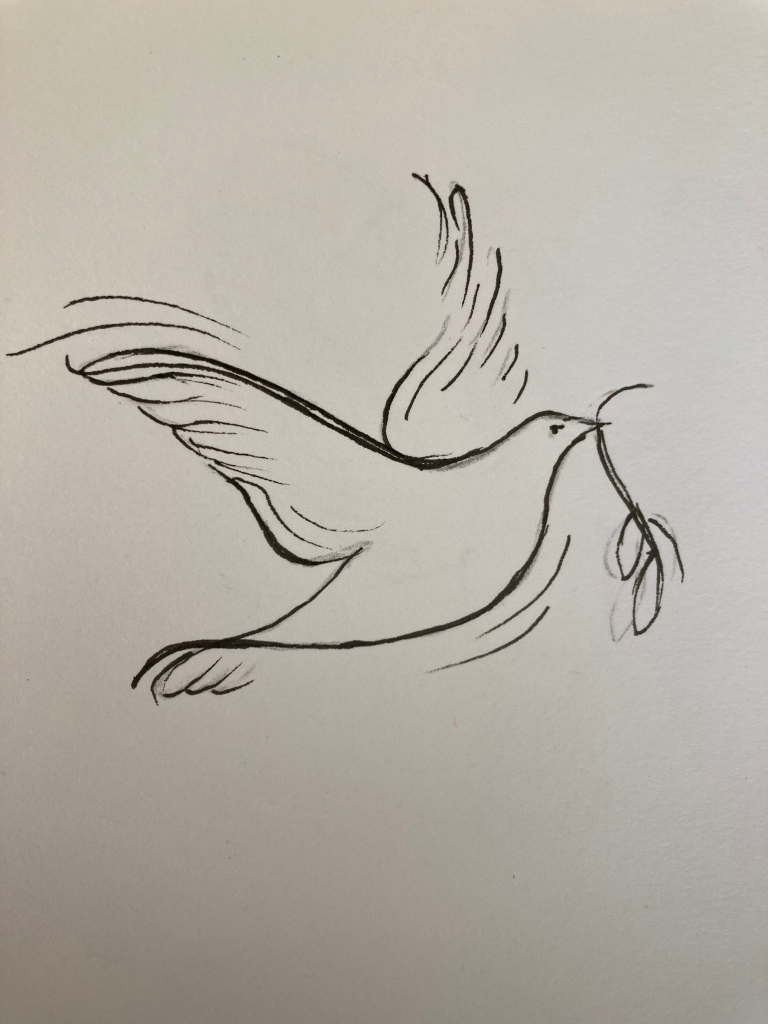
The Mourning Dove has been used as a symbol of peace, friendship and harmony in many cultures and religions around the world. From Ancient Greek and Roman mythology to many North American Indigenous legends, the mourning dove also represents love, hope and a connection to the spiritual world.
“There can never be world peace until we learn to live in harmony with nature as well as with each other,” said Jane Goodall, United Nations Messenger of Peace on Peace Day 2025.