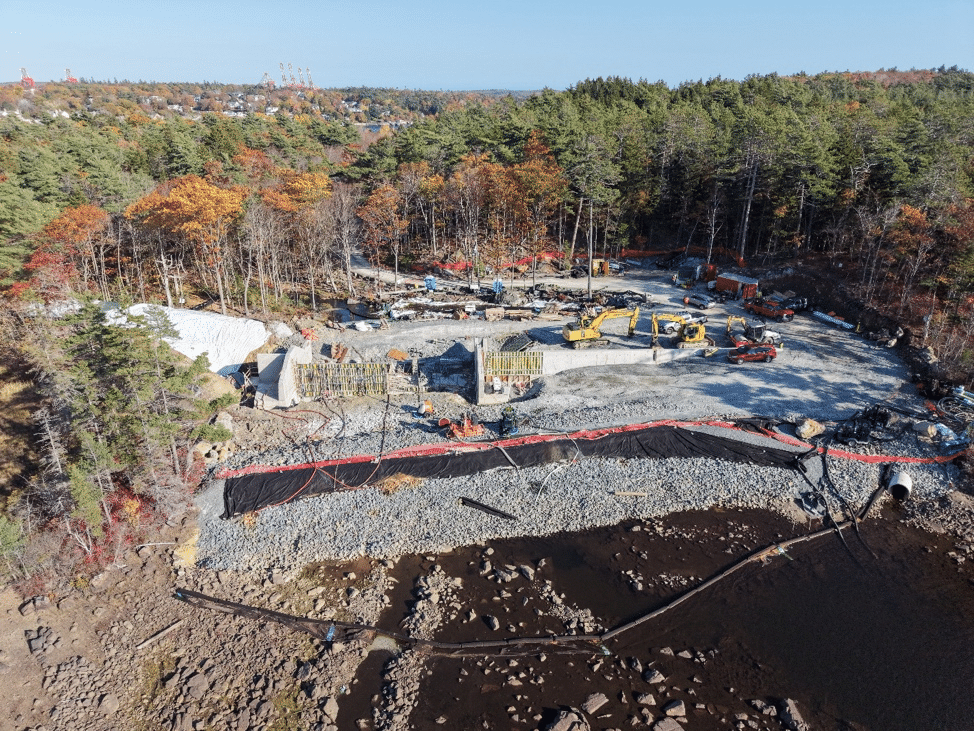
photo: Build Nova Scotia drone
Why is the new dam so big and take up so much land?
By: Cathy Vaughan, November 2026
The original Williams Lake dam was 255 years old. What you saw was a layer of concrete sandbags on top of a pile of rocks with a small centre keystone spillway, surrounded by a lush, old forest with a shoreline perfect for all-season recreation on the lake. The small dam did a big job. What you didn’t see was the other 50m of the dam which extended from the island in the lake to the gravel beach on its south side.
What is important to remember when comparing a modern, engineered dam with a structure originally built around 1780 is that today’s engineering standards, design practices, regulatory codes and environmental concerns are completely different. You can’t judge the new dam by its looks!
The replacement dam has been designed in accordance with modern Canadian Dam Association engineering standards. This includes consideration of extreme weather events, such as the 1-in-100-year storm – reminiscent of the abnormal amount of rainfall experienced during the 2023 flood event! Consequently, the new dam is both taller and wider than the original structure.
While the new structure will be more visible than the original dam, its increased width dimensions are necessary to meet current safety and performance requirements. The two-tier-spillway has also been significantly enlarged to safely manage and control water releases from the lake. Unlike the original keystone spillway, which was only a few feet wide and could be easily walked across, the new spillway has been engineered to safely convey high water flows and dissipate the energy of the rushing water to reduce the risk of erosion and washout downstream.
You will not be able to walk across the new spillway. Public safety is a priority for Build Nova Scotia and the Halifax Regional Municipality. Handrails, and signage will be installed around the spillway and other key areas of the dam to protect visitors from the hazards associated with fast-moving water and steep embankments.
Despite all these modern changes, the normal operating water level of the lake will remain unchanged at 17.80 metres above sea level. The new dam will do its job of holding water levels, but we can’t regulate or control the impact of global warming on lake water levels – longer, hotter summers, increased evaporation and decreased rain and snow fall events.
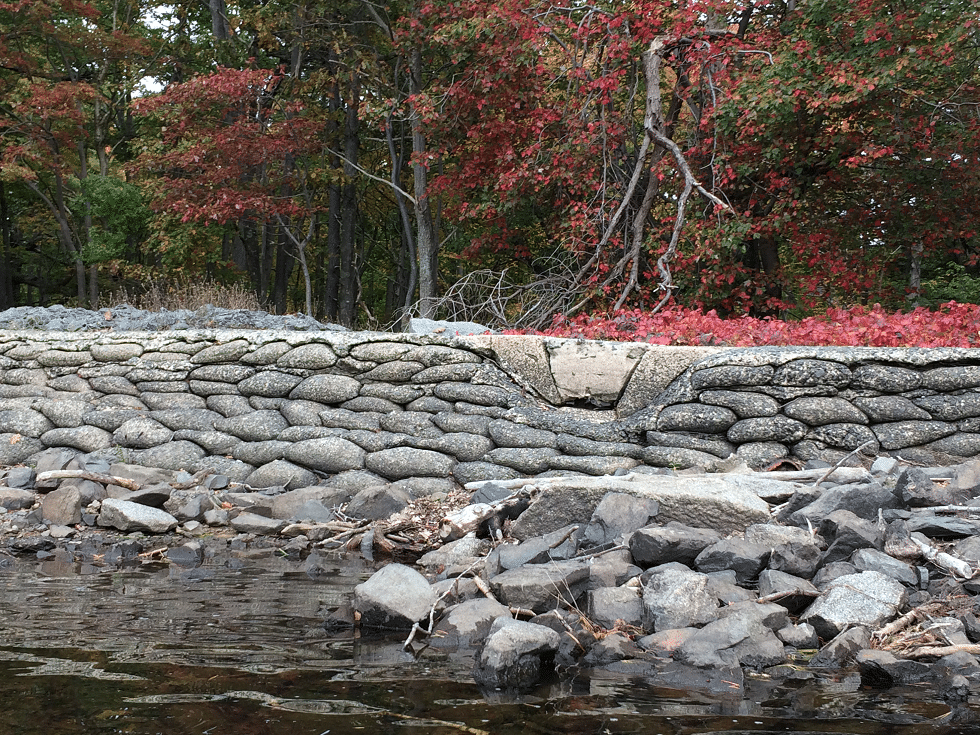
Photo: Cathy Vaughan, October 2021
Once the new dam construction is finished and tested, the dewatering equipment, underground pipes and rocky cofferdam will be removed. The clean fill from the cofferdam will be reused to shape the area and landscaped in the spring of 2027. Regular seasonal rain and snowfall will soak the huge watershed around the lake, and its run-off will naturally replenish the lake basin.
Landscaping work and reforestation will continue in the spring. Until then, some portions of the area will be temporarily out-of-bounds. Once this work is complete, access to the Shaw Wilderness Park path to the Etu’qamikejk Trail will reopen to visitors. This rock and root, single-track trail “traverses an unusual landscape with vistas varying from serene to spectacular” according to the Backlands Coalition website.
Williams Lake Conservation Company (WLCC) is the local volunteer organization liaising with Build Nova Scotia on this project. Continue to visit the website for useful information on the dam construction timetable, announcements, current Chebucto News articles about the progress on the dam, photos, and drone videos of the building of the new dam.
Join. Support. Donate!
WLCC activities are fuelled by our committed volunteers and financed by your membership dues and generous donations. Thanks to everyone in the community for your continued support of our conservation efforts as we continue to advocate for the health of Williams Lake and its wildlife.
For those who would like to know and do more, find out how to “Join. Support. Donate“ at https://williamslakecc.org/membership