New Dam, New Design
By: Cathy Vaughan
Reprinted with permission from Chebucto News
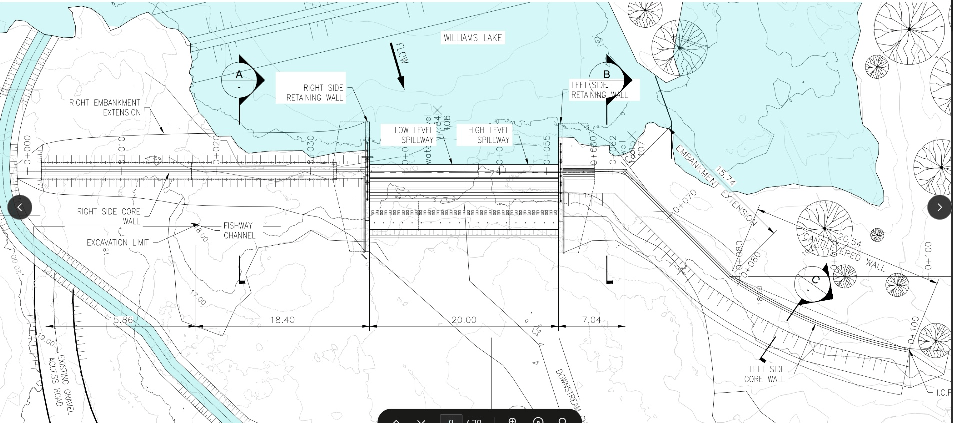
Build Nova Scotia’s engineering schematic of the new and improved dam on Williams Lake.
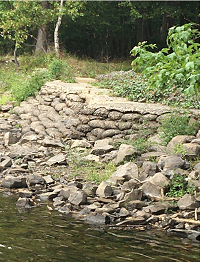
The life cycle of the old leaky Williams Lake dam has far exceeded its expiry date. The old relic has had a long productive life and played a central role in providing hydropower downstream to various industries on the shores of the Northwest Arm in the 1700s.
In more recent memory, the dam has held Williams Lake waters for many generations of folks and families, offering healthy outdoor recreation opportunities for the HRM community. It supported important biodiversity, multifaceted ecosystems, abundant wildlife and globally unique flora and fauna for the past 255 years. Good job!! Well done! Appreciate your service to our community.
The new dam is very modern, built to Canadian Dam standards by Build Nova Scotia with Dexter Construction Company and will be managed by Halifax Regional Municipality. The new dam will look significantly different, control lake levels more efficiently and safely, and have some very cool modern features – like a split-spillway and a fishway channel.
Excavation of the area, located in the Shaw Wilderness Park on Purcells Cove Road, began in May and is steadily progressing to where construction crews are now ready to remove the old dam. Preliminary digging and excavating of two trenches deep in the embankments on both sides of the old dam will be the location of the new dam. Wooden and metal forms will shape the concrete poured for these ‘wing-walls’ in the trenches. These concrete retaining walls act like a dam and work together with the new split-spillway in the centre of the structure. You won’t see the concrete wing-walls as they will be covered with earth and eventually landscaped with native plants. While these wing-walls will disappear, they will do their duty as a dam is supposed to and protect the shoreline from flooding.
Once the old dam is safely removed crews will clear the area down to bedrock and drill rebar ‘shepherds hooks’ into the bedrock to secure the footings of the spillway structure to the site.
Check the schematic above and notice that the split-spillway has two sections – the main section is built to hold the lake to regular spring season level. The higher, wider section is several inches above the main spillway and designed for abnormal heavy rainstorms, or that rare 100-year-storm, when the lower section cannot handle the sudden huge volume of water. As the lake water rises and safely overflows the higher part of the spillway both sections will act in tandem to release lake waters safely. This type of split-spillway ensures the lake levels do not exceed the top of the higher part of the spillway to protect the area from flooding.
Federal and provincial regulations require a fishway channel or fish ladder to give free movement of migratory fish to feeding and spawning areas in Williams Lake. Fishway channels are designed for specific fish. The “pool-and-weir” design used in the new Williams Lake dam duplicates a natural waterway to attract salmon, trout, gaspereau and eels. This necessitates careful calculations of its slope with the water velocity calibrated for these specific fish. The channel will include resting ponds big enough to hold several fish as they make their way into Williams Lake.
With the unprecedented rise in global temperatures we are experiencing around the planet and in our own backyards, a modern dam will help protect our Williams Lake and its watershed for several more generations.