Fishway Channel – Modern Feature of New Williams Lake Dam
By: Cathy Vaughan
With permission from Chebucto News
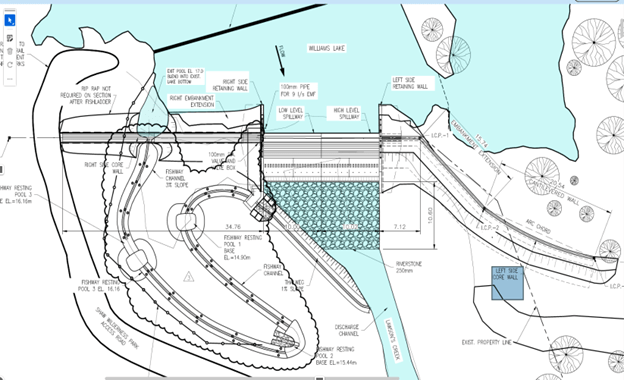
For 255 years migratory fish which live in the ocean and spawn in freshwater have not been able to reach breeding and feeding areas in Williams Lake. The old dam, built of earth, rock, wood and a bit of concrete in the 1700s for industrial use, blocked their regular migratory journey to their freshwater spawning grounds. That is about to change with the addition of a modern fishway-channel feature in Build Nova Scotia’s construction plan for the new dam on Williams Lake.
Fishway channels or fish ladders are structures that act like a natural river to provide a way for migratory fish in the ocean to access freshwater habitats upstream. Healthy adaptable fish populations require diverse types of ecosystems throughout the seasons and their own life cycles. The more lake habitats that are connected the larger, healthier and more resilient fish populations are.
The new dam on Williams Lake will have a fishway channel as required by our federal Department of Fisheries and Oceans Canada and provincial environmental agencies under the Fisheries Act. These departments act in tandem with the Canadian Dam Association which sets the engineering and safety standard for the dam and its fishway channel design and maintenance. What’s safe for the fish is safe for us.
Fishway channels are designed for specific fish. The “pool-and-weir” design used in the new Williams Lake dam duplicates a natural water way to attract salmon, trout, gaspereau and eels. This necessitates careful calculations of its slope with the water velocity calibrated for these specific fish. The channel will include resting ponds big enough to hold several fish. But first we need to coax the fish into the fishway entrance at the base of the dam.
Migratory fish instinctively swim upstream when they are ready to spawn. Their GPS uses the sound and feel of the bubbly turbulence of fresh water flowing out of a river as it enters the ocean. Once they make it up Lawson’s Creek from the salt water in the Northwest Arm, they are attracted to the fishway by the velocity of the water flowing out of its entrance.
Migratory fish are vital to nature’s food chain as they bring important marine nutrients to the lake waters, contribute to a balanced and healthy aquatic ecosystem and are an important indicator of the health of a lake. The new dam with its modern fishway will enrich the lake’s biodiversity, help to preserve aquatic habitats, and support sport fishing activities in the lake. Williams Lake is a paddle-friendly lake with four community entrances and over a kilometre of shoreline in the Shaw Wilderness Park in the Williams Lake watershed.
For updates on this fishy-phase of construction of the new dam, please follow Williams Lake Conservation Company social media and check Build Nova Scotia’s website.